Six Digits and a Letter: Which UK Apps Treat a Postcode Like It's a State
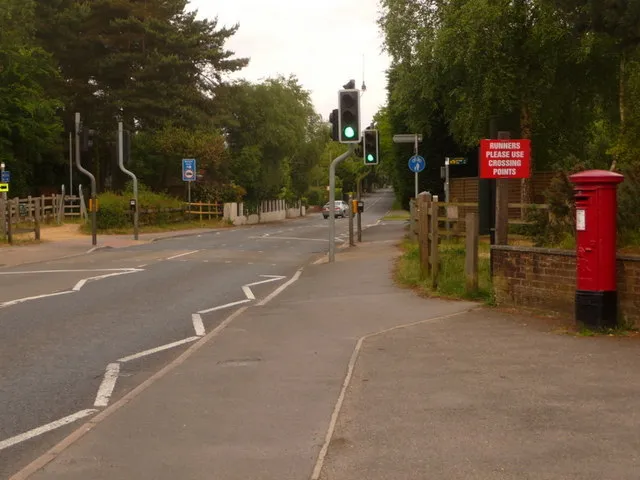
Photo: Chris Downer, CC BY-SA 2.0, via Wikimedia Commons
A while back I tried to get a replacement part delivered to a flat in Bristol and the checkout asked me for a state. Not a county. A state. I typed Greater London out of spite, it accepted that, and I have been quietly furious about it ever since.
So this is the audit I have been threatening to do. Forty apps, all of them things a British person might reasonably have on their phone, put through eleven checks on whether they behave as though the UK is a real market or an afterthought with a Union Jack on the splash screen.
The eleven checks
- Does the address form take a postcode first, and does it accept it with or without a space, in any case?
- Is there a State, ZIP or Zip Code field anywhere in the flow?
- Is County optional, pre-filled, or absent? (It should be optional or absent. Large parts of Britain have not had a meaningful county in decades.)
- Does address lookup actually use a UK postcode database, or does it guess?
- Dates: is 08/11/2026 unambiguous, and does 11/08/2026 mean August?
- Currency: is the pound sign in front of the number and are pence shown sensibly?
- Clocks: 24-hour option, and does the app cope with the switch between GMT and BST?
- Spelling: colour, organise, centre, licence as a noun, cheque.
- Phone numbers: +44 handling and mobile numbers formatted the way we write them.
- Wording: postcode, basket, town or city, nearest branch.
- Maps: does it default to the UK and can it find a place by postcode alone?
Each app scored out of ten, with a point off for every stumble that a British user would notice in the first week.
Built for Britain
Monzo, Starling, NatWest (9/10 each). Postcode-first, spaced or unspaced, lowercase accepted, no county nonsense, transaction dates written out. Starling loses half a point for still not letting you search a payee by sort code alone.
National Rail, Trainline (9/10). Both understand that a station is not a city and that a journey can be planned from a postcode. Trainline's date picker is the only one in forty apps that made the day-month order obvious without a magnifying glass.
Citymapper, TfL Go (8.5/10). Assumes London, which is fair, but both accept a full UK postcode for the outer reaches without sulking.
Royal Mail, DVLA, gov.uk One Login (9/10). Of course they do. The surprise is how much better the public sector is at this than the private one.
Rightmove, Screwfix, Argos, Ocado (8.5/10). Rightmove in particular handles a postcode with a flat number appended, which is a harder problem than most startups give it credit for.
The tolerators
Amazon, eBay, Deliveroo, Just Eat, Uber, Spotify, Netflix, Vinted, Depop, Boots, Nectar, Tesco Clubcard. Everything works. Nothing offends. But each one has a small tell. Amazon occasionally offers a price in dollars before it remembers. Deliveroo still asks for an address line before a postcode, which means typing your street three times. Uber writes dates the American way in receipts. Vinted spells it "color" in one settings screen and "colour" in another, which is almost impressive.
These apps are not hostile to Britain. They simply grew up elsewhere and never quite finished unpacking.
Raised in Ohio
A parcel-tracking app (4/10) demanded a five-character ZIP code. Ours are six or seven characters including the space. It would not proceed. There was no workaround, no contact form that loaded, and no explanation.
A hotel booking service (3/10) insisted on a State field and did not offer England, Scotland, Wales or Northern Ireland as options. It offered Ohio.
A smart-home app (4/10) displays every date as month-first, which means a firmware update rolled out on 11 August appears as 8 November. I have twice thought my heating had updated itself in the future.
A fitness app (5/10) measured distance in miles but elevation in feet and body weight in pounds while offering no unit settings at all, a combination that exists nowhere on Earth and certainly not in Manchester.
A parking app (5/10) asked for a "license plate" and then rejected the space in "AB12 CDE".
And my favourite: a furniture retailer (2/10) whose address form put postcode last, after a compulsory county dropdown, and required the phone number in a field capped at ten digits with no +44. Its own website, meanwhile, worked flawlessly. Two teams, two countries, one company.
The small choices that make a daily difference
Localisation is not a flag emoji. It is four or five decisions made once and then lived with by millions of people.
Postcode first. It saves an entire address entry. Every app that gets this right feels instantly quicker than the ones that do not, and none of them advertise it.
Accept the postcode however it arrives. Lowercase, no space, an extra space. Normalise it on your end. Do not make me format data for you.
Bin the State field. If you genuinely need region for tax or delivery, call it something else and make it optional. Nobody in Sheffield wants to pick a state.
Write dates out. "8 Nov 2026" cannot be misread. 08/11/2026 can. This is not a hard problem, it is a lazy one.
Get the pound sign on the left and the pence right. £12 is fine, £12.00 is fine, 12£ is not.
Handle GMT and BST. If you are showing me a delivery slot in a time zone called GMT+1, you have already lost.
The bottom line
The gap is not between British and American companies. Amazon is American and mostly fine. The gap is between teams who tested with a real UK postcode and teams who tested with the one example in their design file, which is usually SW1A 1AA and usually typed by someone in another country.
Forty apps in, the ones that feel British are the ones that quietly assumed a postcode is the most useful piece of information on the form. That is it. That is the whole trick.