Warm Pocket, Flat Phone: Ranking Thirty UK Apps by What They Do to Your Battery
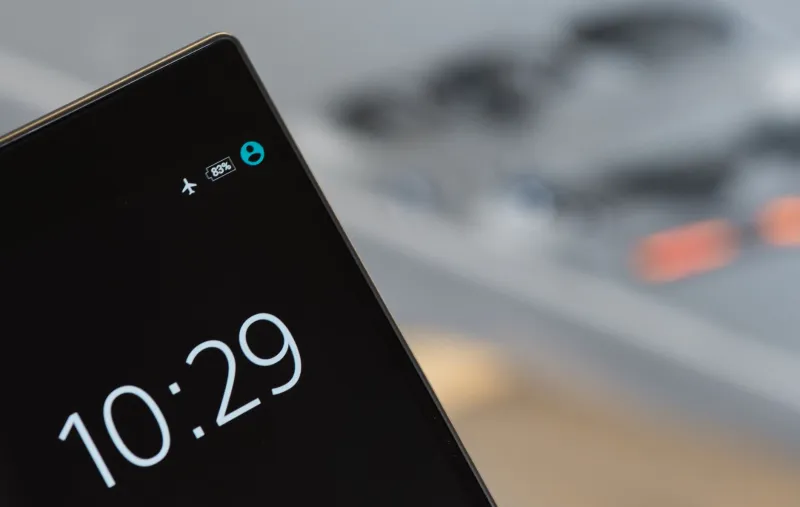
A warm thigh on the 07:42 out of King's Cross is not a medical emergency, but it is a tell. Somewhere in my pocket an app had decided that a dark screen was merely a suggestion. By Doncaster the phone had lost 40 per cent doing absolutely nothing, so I spent three weeks this autumn working out which of the thirty apps I actually use is the one keeping the radiator on.
How the test worked
One phone: an iPhone 15 with battery health at 91 per cent, running the current iOS. Brightness pinned to 50 per cent, Wi-Fi and mobile data both on, Bluetooth on, location permissions left exactly as each app shipped them. I cross-checked the top and bottom five on a Pixel 8a and the ordering held, which is about as close to science as a battery percentage ever gets.
Two passes per app, in randomised order, at least a day apart.
Screen-on: thirty minutes of continuous, hands-off use. No navigation, no camera, no gaming. Just the thing the app is actually for.
Background: eight hours in a pocket, screen off, notifications allowed at whatever the app defaulted to, never force-quit. An eight-hour idle run with no third-party apps installed cost 1.8 per cent, so that is the line everything gets measured against.
Battery readings are coarse, so I report medians and treat anything within a point of its neighbour as a draw.
The warm-pocket club
Eight hours of doing nothing at all, ranked by what it cost.
| App | Background drain (8 hrs) | Likely cause |
|---|---|---|
| Citymapper | 9.4% | location checks that never really stop |
| Uber | 8.1% | driver tracking, even with no ride booked |
| Deliveroo | 7.6% | order status polling plus location |
| National Rail | 7.2% | live departure refresh on a loop |
| RingGo | 6.5% | parking session timers and location |
| McDonald's | 6.0% | offers, geofencing, quiet wake-ups |
| Baseline, no third-party apps | 1.8% |
The pattern is boring and mostly fixable: location, plus a refresh cycle nobody asked for. Citymapper's near-10 per cent is the price of a journey planner that wants to know where you are before you have asked it anything. It is a genuinely good app with an expensive default setting.
The screen-on league
Different story, and a fairer one. Half an hour of BBC iPlayer at 50 per cent brightness cost 6.8 per cent. Google Maps in walking navigation cost 7.5 per cent, which is exactly what a lit screen and a GPS radio are for. Trainline came in at 4.1 per cent, Tesco at 2.9, Monzo at 2.2.
Banking apps, for all the suspicion aimed at them, are among the cheapest things on the phone. That is worth saying early, because the apps people worry about and the apps that actually cost you charge are rarely the same list.
Why your pocket runs hot
Three culprits turned up again and again.
Location with no off switch. "Always" permission plus a background task means a radio waking every few minutes. Signal strength matters as much as the app. On a train seat with one bar, the phone turns the radio up to shout, and every background ping costs several times what it would on home Wi-Fi. My worst drain days were also my worst coverage days, which is no coincidence.
Silent pushes. Marketing notifications feel free because each one is small, but every message wakes the processor, lights the screen for the wrong person and sets off a chain of follow-up requests. The apps sending four offers a week were consistently warmer than the ones that send a receipt and shut up.
Third-party luggage. A lot of apps bundle the same analytics and advertising libraries, and those run whether or not you have opened the app that day. You cannot switch them off one at a time. You can only decide whether the app is worth its entourage.
What I changed, and what I refused to change
I did not delete anything. Anyone telling you to uninstall your bank to save two per cent has not thought it through.
- Location set to While Using for everything except maps, and Precise Location off for apps that only need a street name.
- Background App Refresh off for the warm-pocket six, left on for Monzo, NatWest and National Rail, where a delayed alert defeats the entire purpose.
- Promotional push notifications off, transactional ones kept. On its own this took roughly four points off a typical day.
- No more force-quitting. It costs more than it saves; a cold start is expensive.
- Low power mode on long train journeys, where the radio is fighting the signal anyway.
Net result: about 12 per cent of a day recovered, and not a single app lost.
The verdict
Thirty apps, one handset, and a league table that says more about defaults than about engineering. The worst offenders here are not badly built. They are built for engagement, and engagement means waking up. Battery drain is a design decision, and a warm pocket is just the receipt arriving early.
If your phone is flat by four o'clock, start with the six names above and your notification settings. Leave the banking apps alone. They have done nothing wrong.