Cornwall, Cumbria and the Council App That Has Never Heard of Either
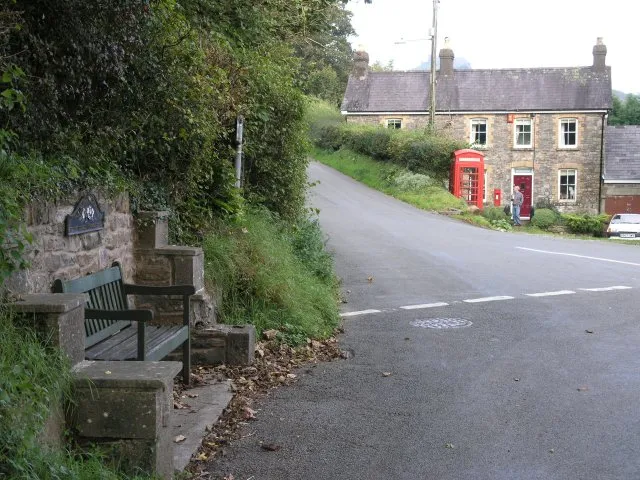
Photo: Hywel Williams, CC BY-SA 2.0, via Wikimedia Commons
There's a moment, some way past the last motorway junction, when your phone stops being a helpful little assistant and starts being a mild embarrassment. You open the parking app the internet swore by and get a map with nothing on it. You open the bus app and it shows one ghost service, last seen forty-seven minutes ago. You open the council app and it cheerfully offers you a form for a service your council doesn't actually run.
None of this is a scandal. It's just what happens when software built for dense, well-mapped, heavily-funded places gets carried out to places where the density is low and the data is thinner than the leaflet rack at a village hall. To find out how bad it really is, we spent three weeks testing everyday apps across 124 UK postcodes — coastal Cornwall, the fells of Cumbria, East Anglian market towns, Welsh valleys, a few London postcodes for control, and a scattering of commuter belt towns where the answer was often 'half works'.
How we ran the test
Two phones on two different networks, one weekday and one Saturday per location, and a short list of jobs: pay for parking, find the next bus and trust it, check bin day, report a problem to the council, and find one genuinely useful local thing (a pharmacy, a recycling point, a bus that exists). We weren't scoring design. We were scoring whether a normal person with no local knowledge could get a result in a couple of minutes.
We deliberately didn't let ourselves ask a human first. No ringing the tourist office. The point was whether the app alone could do the job.
Parking is where the London-centrism shows first
Parking apps are, in principle, the most national thing on the list. In practice, the app is a shopfront and the council is the stockroom. Where a council has done the unglamorous work of keeping zone names, tariffs and session lengths tidy, everything is fine. Where it hasn't, you get zone codes in the app that match nothing on the sign, location names that are somebody's internal shorthand from 2014, and a map pin that sits roughly 300 metres from the actual car park.
We lost count of the times a sign said one thing and the app said another. In one Cumbrian town, the app listed a car park under the name of the road behind it, not the one it's on. In a Cornish harbour, the session options didn't include the two-hour tariff printed on the board. In both cases, the honest fix was to walk back to the machine and use a card. Which rather defeats the purpose.
One workaround that consistently worked: photograph the parking sign before you open the app. The sign is the source of truth. The app is a hopeful interpretation of it.
Live bus tracking quietly stops at the ring road
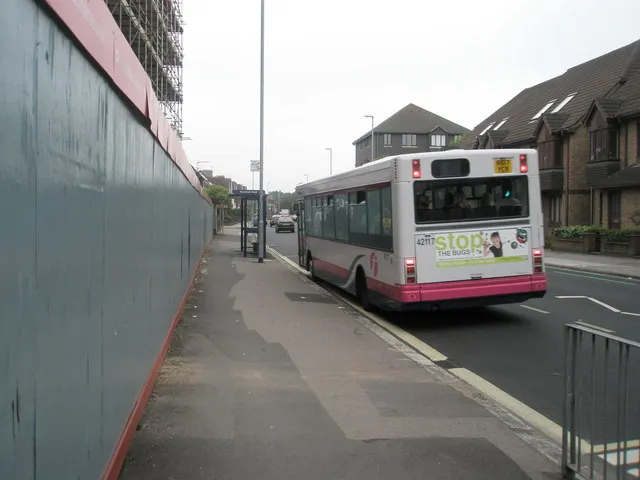
The pattern here is well known by now but still worth saying plainly. Operator apps — and the big groups have decent ones — are reliable when the operator is the only operator in town. The trouble starts where two or three companies run services down the same high street. No single app sees the whole timetable, so you end up with three apps, two of which are wrong, and a 20-minute wait you could have spent in a café.
City navigation apps remain superb in large cities and thin to the point of uselessness elsewhere. A town with four bus routes doesn't generate the data density these products are built around. If your local buses are run by two rival firms, the operator app is usually the better bet and the aggregator is the optimistic one.
Council services: the recycling calendar gap
Bins are the great missed opportunity. A handful of councils do this beautifully — a proper reminder, an email or text the night before, an occasional note when the collection shifts for a bank holiday. Most do not. Most offer a downloadable PDF calendar, which is a document, not a service.
Reporting a problem is the other test. Some councils let you report fly-tipping, a pothole or a broken streetlight in under a minute with a photo and a pin. Others want you to create an account, verify an email and enter a reference number you have never seen in your life. The frustration isn't the app's fault, exactly — it's a policy choice dressed up as a form.
Practical answer: screenshot your bin calendar in January, keep it in an album, and treat the council website as the app. Also worth knowing that a surprising number of councils use the same third-party reporting platform, so the experience can flip from excellent to dire at a county boundary.
What actually held up
The things that worked everywhere were, unsurprisingly, the ones with no local dependency. Weather, banking, rail journey planning, the NHS app, parcel tracking, barcode scanning, translation, and the entire category of 'apps that don't need to know where you are'. Banking apps in particular are genuinely national in a way almost nothing else is — slow to onboard, then faultless at a cash machine in the middle of nowhere.
Interestingly, the second-hand and food-waste apps worked well in cities and simply had nothing to show in smaller places. That's not a design flaw, it's a network problem, and no amount of good UX fixes an empty marketplace.
A short checklist for anywhere outside the M25
- Check the council website before downloading anything. It usually names the parking and reporting apps it actually uses.
- Photograph parking signs and tariff boards. Keep them until you've paid.
- Download the operator's bus app, not the aggregator, if your town has one dominant operator.
- Screenshot bin days and seasonal changes in one go, in January and again in autumn.
- For council reporting, get the account set up on a quiet evening rather than in the rain with a bin bag in your hand.
- Have a card and a bit of change as a fallback. Boring, but it has never once let us down.
- Report bad data to the app. Coverage in small places improves when people tell them the pin is wrong.
What we'd ask of developers
Three things, none of them glamorous. Let people search by postcode before demanding location access. Publish honest coverage, so a reader in a village knows in ten seconds whether this is for them. And make the app work offline for the basics — the parking you've paid for, the bus you're waiting for, the bin day you've already looked up.
The London bias in British apps is rarely malice. It's density. It's just that density has a way of looking like the whole country when you're sitting in an office in zone two. We tested 124 postcodes. Most of them are not zone two, and a good few of them deserved better than a blank map and a shrug.