Nine Apps, One Soggy Commute: What Actually Kept Me Dry on a November Morning
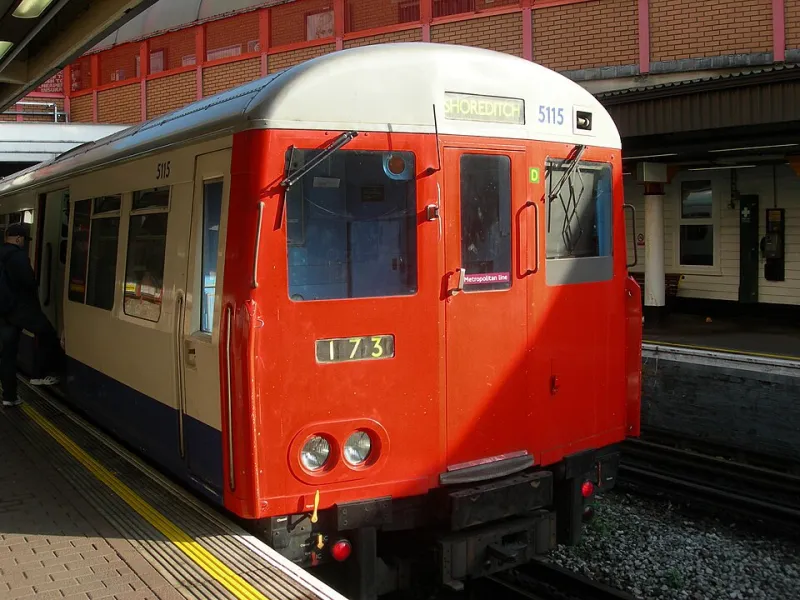
Photo: Unknown, CC BY-SA 2.0 uk, via Wikimedia Commons
The alarm went at 06:10. Rain was coming at the window sideways, the sort of November morning where the sky looks like a dirty dishcloth and the wind has opinions. I had a bus to catch, two trains, a Tube ride and a twelve-minute walk at the other end. Nine apps had one job: get me there dry, or at least tell me honestly that dry wasn't on the menu.
This wasn't a lab test. It was one commute, taken once, on a morning when the weather and the railway were both in a mood. That's the only kind of test that matters, really.
How the scoring worked
Three questions, applied to every app on the list:
Alert timing. Did the useful warning land before I put my coat on, or after I was already standing under a leaky canopy?
Disruption clarity. When something went wrong, did the app say what happened, how long it would last, and what I should do instead? Or did it just spray jargon at me and hope?
Advice integrity. Did the alternative it recommended actually work when I tried it? This is where most apps quietly fall apart.
1. Met Office
The only app that told me something genuinely useful before the day started: an amber warning for wind, issued the evening before, with a rainfall window narrow enough to plan around. The wording was sober, the timing was early, and the forecast held. It didn't try to be my journey planner and it didn't need to. Verdict: keep.
2. Citymapper
Still the best app in the country at answering the only question that matters at 06:15, which is 'should I leave now or in eleven minutes?' It spotted that my usual bus was running nine minutes late, offered a walk-plus-different-bus combination, and — crucially — that combination worked. It's London-centric and it knows it, but on this morning it was the difference between damp and drenched. Verdict: keep.
3. National Rail
The disruption information was accurate and detailed, which is not nothing. The problem is tone. A paragraph explaining a points failure near a junction I've never heard of is technically clear and practically useless when I'm on a platform with four minutes to decide. The app tells you what the railway knows; it doesn't tell you what to do. Fine as a reference, frustrating as a guide. Verdict: keep, but only for checking.
4. TfL Go
If you live inside the M25 and never leave it, this is close to flawless. Live bus arrivals, platform-level detail, sensible step-free routing. It flagged a signal problem on my Tube leg before I'd got through the barriers and suggested a change that added four minutes instead of forty. Zero complaints, aside from the fact that it stops being useful the moment you cross the boundary. Verdict: keep if you're a Londoner.
5. Trainline
Good at what it's for — finding and buying a ticket — and its live departure information was right on the day. It also pushed a 'your journey may be affected' nudge that turned out to relate to a service I wasn't on. Harmless, but it's the sort of thing that trains you to ignore the app's warnings, which is a slow way to become useless. Verdict: fine, with notification discipline.
6. BBC Weather
The hourly view was broadly right and the interface is a pleasure. But the warning arrived an hour and a half after the Met Office's, which on a commute morning is the difference between adjusting your plans and simply getting wet. Beautiful, slightly late. Verdict: second screen, not first.
7. AccuWeather
The minute-by-minute rain feature is genuinely clever and genuinely accurate for about twenty minutes ahead. Unfortunately it also decided that every shower was an emergency worth a push notification. By 08:00 I'd had six. By 08:30 I'd turned them off, which rather defeated the point. Verdict: good tool, over-eager housemate.
8. Google Maps
Perfectly competent in a city, patchy the moment you rely on it for a rural bus that may or may not exist. It routed me well and then confidently predicted a bus arrival that was off by eleven minutes. The walking directions were, as ever, excellent. Verdict: backup.
9. First Bus
The local operator app. The timetable was there. The live tracking was, at best, aspirational — the map showed a bus approaching for so long I began to suspect it was a screenshot. This isn't a criticism of the drivers, who were out in the weather doing the actual work. It's a criticism of an app that hasn't earned a place on anyone's home screen. Verdict: delete.
What this actually tells you
The surprise wasn't which app won. It was how little overlap there was between the apps' strengths. One knew about weather. One knew about my journey. One knew about the railway. None of them knew about all three, and that gap is where the wet socks live.
A few things worth stealing for your own setup:
- Three apps is a working number. One weather source with warnings switched on, one journey planner you trust for your actual route, one operator app if your line or bus route is unreliable enough to justify it. Everything beyond that is noise dressed as preparedness.
- Notification timing beats notification volume. Set warnings to arrive early and rarely. An app that pings six times a morning gets muted by Wednesday.
- Trust the metro app inside the city and the national one outside it. They're built for different questions.
- Check the night before. Every app on this list performed better when I gave it twelve hours' notice rather than twelve minutes.
The honest verdict
Was I dry when I got to the office? Mostly. One ankle, one shoulder, and a rucksack that now smells faintly of November.
The apps that helped were the ones that told me something early and then shut up. Met Office and Citymapper did the heavy lifting, TfL Go covered the middle, and the rest filled gaps or made noise. Which, honestly, is the best you can ask of software when the British weather and the British railway decide to collaborate against you.