Twenty-Four Subscriptions, One Spreadsheet: Which UK Apps Failed Our Honesty Test

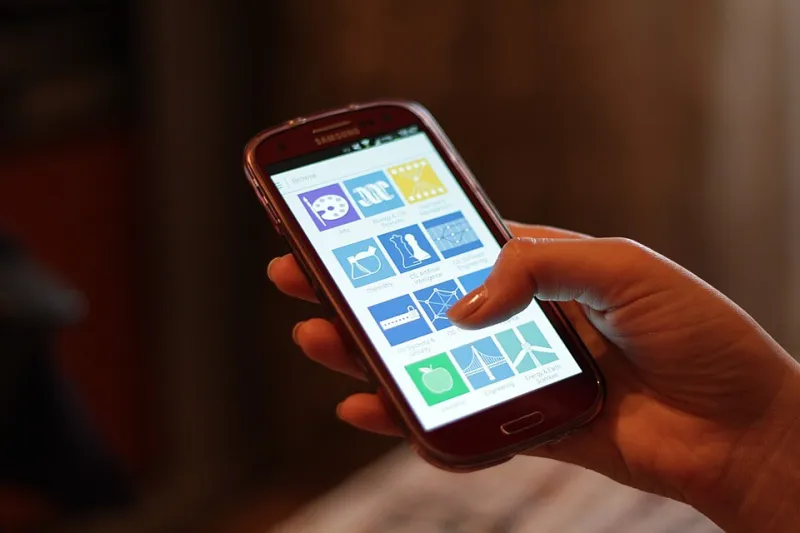
Photo: smartphone showing subscription payment screen with bank card and receipt on desk, via i.pinimg.com
Nine pounds ninety-nine is not an accident. It sits below the tenner in your head, it reads as trivial next to a coffee, and it renews quietly enough that most people couldn't tell you what they're paying for it by the following spring.
Over six weeks we audited 24 UK app subscriptions — productivity tools, fitness, recipe and meal planning, photo editing, language learning, a couple of news titles, a handful of streaming-adjacent services. We took out each subscription, screenshotted every screen from sign-up to cancellation, and logged the wording, the pricing, and how many taps it took to get out. Most were mid-priced monthly plans in the £4.99–£12.99 band; three were annual.
This is what we found.
The five-question honesty test
Every app got the same questions. Any single 'no' was a fail.
- Was the renewal price shown as prominently as the introductory price? Not buried in a help page — on the same screen, in the same type size.
- Was the VAT-inclusive total visible before payment details were entered? In-app billing through Apple or Google generally handles this properly. Web checkouts are where it slips.
- Did the free trial state its end date in plain terms? A date, not 'after your trial period'.
- Could you cancel in the app, without emailing anyone, in four taps or fewer?
- Was there a renewal reminder you didn't have to hunt for?
Thirteen passed cleanly. Eleven did not.
What the thirteen got right
Nothing heroic. The passing group simply did the dull things properly: a clear renewal date on the account page, a price shown with tax included, a cancellation screen that says what you'll lose and how long you keep access, and — in a handful of cases — an email a few days before renewal.
The best of them sent a reminder with the exact amount, a link to manage the plan, and no attempt to upsell on the way out. That's the whole standard. It is not difficult, which is why the failures are more interesting.
Failure one: the trial that never announced itself
Four of the eleven ran a free trial that converted to paid without a message at the point of conversion. In two cases the first thing I knew about it was a bank notification.
Worth saying plainly: both major app stores now prompt you before a trial ends, and those prompts work. The failures were concentrated in apps that push you to a web checkout for a 'better deal' — and then quietly lose the reminder infrastructure that comes with store billing. If a service steers you off-platform to save a few percent, that discount is partly payment for losing your safety net.
Failure two: the price that only becomes a price at the last step
Three apps displayed monthly pricing excluding VAT on the plan page, then added 20% at the payment screen. The final total was always going to be higher; that's fine. Showing £8.00 and charging £9.60, without saying why, is not.
This one bites hardest on annual plans, where the jump is bigger and the surprise arrives attached to a card already in your hand.
Failure three: the cancellation obstacle course
Two apps could not be cancelled inside the app at all. One required an email to a support address, with a stated response window of five working days — during which, naturally, the renewal went through. The other offered a live chat that only operated 09:00–17:00 on weekdays, with a queue.
Neither is unusual. Both are choices. A company that can take your money in three taps from a phone can take a cancellation in three taps from the same phone; anything else is a deliberate design decision about which direction the friction should run.
Failure four: the wording that doesn't quite say anything
Two of the eleven used language that was technically accurate and practically evasive. Phrases like 'your plan renews at the then-current rate' — meaning the price you signed up at has no protection at all — appeared on the receipt but not on the sign-up screen. One advertised a 'lifetime' tier in a help article that, on close reading, meant 'the lifetime of the product'.
We're not naming the eleven individually. Partly because the patterns matter more than the names, and partly because several of these screens are the sort of thing a company can change in an afternoon — and several, to be fair, probably will.
What the rules actually say
The subscription regime under the Digital Markets, Competition and Consumers Act 2024 has been phasing in, and it pushes in the right direction: clearer pre-contract information, reminders before a subscription rolls over, and an easier route out. The Competition and Markets Authority has also been steadily firmer about drip pricing and misleading urgency.
That's welcome. But the enforcement timetable moves slower than a product team, and in the meantime the practical defence is attention. The 2013 consumer contracts rules on distance selling are also worth knowing — though note the digital-content exemption once you've started downloading, which is exactly why the trial-conversion message matters so much.
How to protect yourself in five minutes
- Pay the boring way where you can. Store billing is less friction-free than it looks; it's simply the friction in a place you can find.
- Use one card for subscriptions, or a virtual card per service. Cancelling a card is a blunt instrument, but it's a very effective one.
- Screenshot the sign-up screen. It's your only reliable record of what you were promised.
- Read the renewal line, not the headline. The interesting number is the second one.
- Do a quarterly audit. Search your bank statement for recurring amounts under £15. That list is longer than anyone expects.
The verdict
Thirteen of 24 apps treated a subscription as a straightforward agreement between two parties. Eleven treated it as a test of whether you'd notice.
The honest version of a £9.99 subscription is easy to build: show the real price, say when it renews, remind people before it does, and let them leave in the same number of taps it took them to arrive. Everything past that is a bet that nobody's checking.
We checked. So should you.